Scientific Legacy

Advancing Solar Physics
and
Space Weather

Over three decades of pioneering research on solar eruptions, coronal mass ejections, heliophysics, and the Sun–Earth connection, shaping modern space weather research in India and beyond.

Major Research Themes

Prof. Nandita Srivastava's research has significantly advanced our understanding of the physical processes governing solar eruptions and their impact throughout the heliosphere.

Coronal Mass Ejections

Understanding the initiation, evolution, propagation and geoeffectiveness of coronal mass ejections (CMEs), one of the most important drivers of severe space weather.

Solar Eruptions

Investigating solar flares, eruptive prominences, magnetic instabilities and the physical mechanisms responsible for energetic solar events.

Solar Filaments

Studying the formation, evolution and eruption of solar filaments and their relationship with coronal mass ejections.

Sun–Earth Connection

Exploring how solar activity propagates through the heliosphere and influences Earth's magnetosphere and near-Earth space environment.

Space Weather

Improving our understanding of space weather processes, forecasting, and the impacts of solar activity on technological systems.

Aditya-L1 Science

Supporting scientific investigations associated with India's first dedicated solar mission and future heliophysics research.

Scientific Journey

Over three decades of research advancing our understanding of solar eruptions, coronal mass ejections, and space weather.

1990s

Foundations in Solar Physics

Early research focused on solar activity, eruptive phenomena, and the observational study of the solar atmosphere, laying the foundation for future investigations of coronal mass ejections.

2000–2010

Coronal Mass Ejections

Major contributions to understanding CME initiation, propagation, and their relationship with solar filaments, solar flares, and interplanetary disturbances.

2010–Present

Sun–Earth Connection & Heliosphere

Research expanded toward the geoeffectiveness of CMEs, space weather forecasting, and understanding how solar eruptions affect Earth's near-space environment.

Major Scientific Contributions

Representative areas where Prof. Srivastava's research has made significant contributions to solar and heliospheric physics.

Understanding CME Initiation

Research aimed at understanding how coronal mass ejections are triggered, evolve in the solar corona, and become major drivers of heliospheric disturbances.

CME Propagation

Studies of CME propagation through interplanetary space and the factors controlling their arrival and impact at Earth.

Solar Filament Eruptions

Investigations of eruptive filaments and prominences, providing insight into the physical connection between filament eruptions and coronal mass ejections.

Operational Space Weather

Contributions linking basic solar physics with practical space weather forecasting and applications relevant to modern technological systems.

Academic Legacy & Mentorship

Throughout her distinguished career, Prof. Nandita Srivastava has mentored doctoral students, postdoctoral fellows, and young researchers from India and abroad. Many of her former students and collaborators now serve at leading universities and research institutions worldwide, reflecting her lasting impact on the global solar physics and space weather community.

Ph.D. Supervision
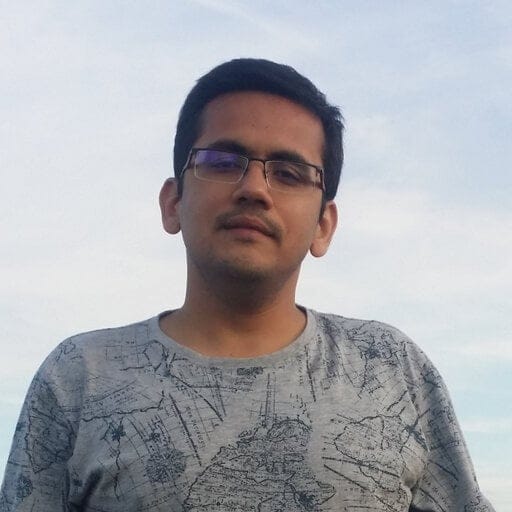
Dr. Anand D. Joshi

Dr. Anand D. Joshi

Ph.D. Student (2006–2010)

Morphology and Dynamics of Solar Prominences

Presently at the National Astronomical Observatory of Japan (NAOJ), Mitaka, Japan.
Dr. Wageesh Mishra

Dr. Wageesh Mishra

Ph.D. Student (2011–2015)

Evolution and Consequences of Coronal Mass Ejections in the Heliosphere

Associate Professor, Indian Institute of Astrophysics, Bengaluru.

Dr. Ranadeep Sarkar

Dr. Ranadeep Sarkar

Ph.D. Student (2016–2020)

Solar Origin of Space Weather

University of Helsinki, Finland.
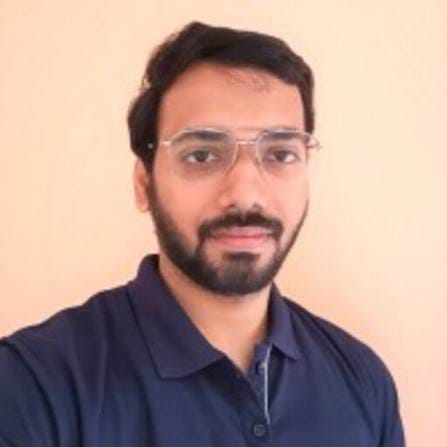
Mr. Suvadip Sinha

Dr. Suvadip Sinha

Ph.D. Student (2018–2023)

Investigating Solar Drivers of Space Weather

Jointly supervised with Dr. Dibyendu Nandy (IISER Kolkata).
Dr. Zavkiddin Mirtoshev

Dr. Zavkiddin Mirtoshev

Ph.D. Student (2018-2022)

Coronal Mass Ejections: Their Solar Cycle Variation and Impact on Space Weather

Samarkand State University, Uzbekistan (Co-supervisor).

Mr. Sandeep Kumar

Dr. Sandeep Kumar

Ph.D. Student (2020-2025)

Heliospheric Propagation of Solar Wind and Coronal Mass Ejections

Awarded by IIT Gandhinagar.

Postdoctoral Fellows

Dr. Anand D. Joshi

Postdoctoral Fellow

December 2011 – November 2012

Dr. Wageesh Mishra

Postdoctoral Fellow

March – May 2015

Presently faculty at the Indian Institute of Astrophysics.
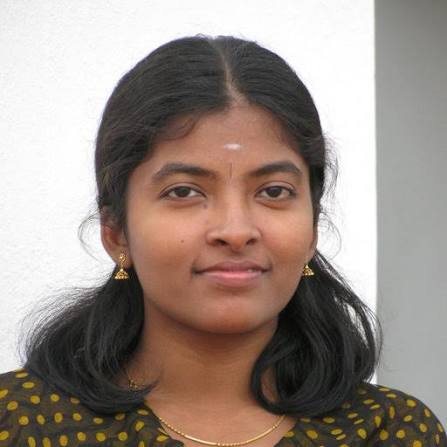
Dr. G. Sindhuja

Postdoctoral Fellow

July 2016 – October 2017

Presently at NASA Goddard Space Flight Center, USA.
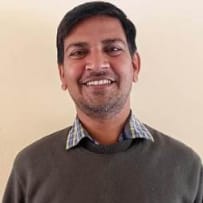
Dr. S. S. Rao

CSIR SRA

November 2021 – October 2024

Presently faculty at Patna University.

Dr. Debesh Bhattacharjee

Postdoctoral Fellow

October 2025 – Present

Postdoctoral Fellow, Udaipur Solar Observatory, PRL.

Mr. Sandeep Kumar

Dr. Sandeep Kumar

Postdoctoral Fellow

September 2025 – Present

Postdoctoral Fellow, Udaipur Solar Observatory, PRL.

International Students & Visiting Fellows

Zavkiddin Mirtoshev

RTF-DCS Fellow (2017)

Samarkand State University, Uzbekistan.

Aditya Jaypal

Summer Research Student (2018)

University of Waterloo, Canada.
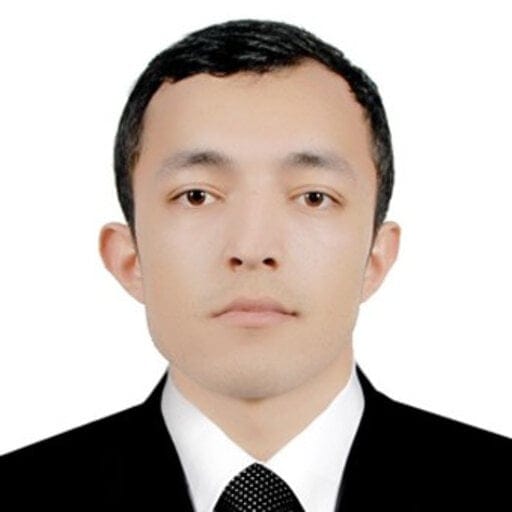
Diyorbek Pulatov

COSPAR Visiting Fellow (2025)

Samarkand State University, Uzbekistan.

Mentorship at a Glance

Over the course of her academic career, Prof. Nandita Srivastava has mentored students and early-career researchers from India and abroad, building a vibrant community of scientists working in solar physics, heliophysics, and space weather research.

6

Ph.D. Students

6

Postdoctoral Fellows

4

Foreign Students

35+

Summer Interns

Publication Record

A distinguished publication record reflecting decades of contributions to solar physics, heliophysics, and space weather research.

101+

Refereed Papers

30+

Conference Proceedings

6+

Edited Volumes

4+

Review Articles

3+

Special Reports

12+

General Articles

Selected Publications

A representative selection of Prof. Nandita Srivastava's research covering coronal mass ejections, solar eruptions, heliophysics, space weather, and solar wind forecasting.

Coronal Mass Ejections & Solar Eruptions

  1. Kumar, S., Srivastava, N., Talpeanu, D. C. (2026). PFSS source surface height optimisation for improved WSA solar wind velocity forecasting across Solar Cycles 23–25. The Astrophysical Journal (Accepted).
  2. Kumar, S., Hegde, D. V., Srivastava, N., Pogorelov, N. V., Gopalswamy, N., & Yashiro, S. (2023). Rotation of a Stealth CME on 2012 October 5 Observed in the Inner Heliosphere. The Astrophysical Journal, 958, 103.
  3. Sarkar, R., Srivastava, N., & Veronig, A. M. (2019). Lorentz Force Evolution Reveals the Energy Build-up Processes During Recurrent Eruptive Solar Flares. The Astrophysical Journal Letters, 885, L17.
  4. Sinha, S., Srivastava, N., & Nandy, D. (2019). Solar Filament Eruptions as Precursors to Flare–CME Events. The Astrophysical Journal, 880, 84.
  5. Sarkar, R., Srivastava, N., Mierla, M., West, M. J., & D'Huys, E. (2019). Evolution of Coronal Cavity from Quiescent to Eruptive Phase. The Astrophysical Journal, 875, 101.
  6. Mishra, W., Srivastava, N., & Davies, J. A. (2014). A Comparison of Reconstruction Methods for Estimation of CME Kinematics. The Astrophysical Journal, 784, 135.
  7. Mishra, W., & Srivastava, N. (2013). Estimating Arrival Time of Earth-directed Coronal Mass Ejections. The Astrophysical Journal, 772, 70.

Space Weather & Sun–Earth Connection

  1. Rao, S. S., Srivastava, N., Chakraborty, M., Kumar, S., & Chakrabarty, D. (2024). Observations of Geomagnetic Crochet at High Latitudes due to the X1.5 Solar Flare of 3 July 2021. Space Weather.
  2. Srivastava, N., Mirtoshev, Z., & Mishra, W. (2023). Variations in the Composition and Heating of Interacting ICMEs. Frontiers in Astronomy and Space Sciences.
  3. Sarkar, R., Gopalswamy, N., & Srivastava, N. (2020). Predicting Magnetic Field Vectors of Interplanetary CMEs at 1 AU. The Astrophysical Journal.
  4. Mishra, W., Srivastava, N., Wang, Y., Mirtoshev, Z., Zhang, J., & Liu, R. (2019). Mass Loss via Solar Wind and Coronal Mass Ejections During Solar Cycles 23 and 24. Monthly Notices of the Royal Astronomical Society.
  5. Sharma, R., Srivastava, N., Chakrabarty, D., Moestl, C., & Hu, Q. (2013). Interplanetary and Geomagnetic Consequences of January 5, 2005 CMEs. Journal of Geophysical Research.
  6. Sharma, R., & Srivastava, N. (2012). Presence of Solar Filament Plasma in Interplanetary Coronal Mass Ejections. Journal of Space Weather and Space Climate.

Solar Wind, Heliosphere & Aditya-L1

  1. Yadav, V. K. et al. (2025). The Fluxgate Magnetometer (MAG) on Board Aditya-L1 Spacecraft. Solar Physics.
  2. Kumar, S., Srivastava, N., Talpeanu, D. C., Mierla, M., et al. (2025). Role of Source Surface Height and Magnetograms in Solar Wind Forecast Accuracy. Journal of Space Weather and Space Climate.
  3. Yogesh, Chakrabarty, D., & Srivastava, N. (2023). Solar Wind Protons and Alpha Particles in Stream Interaction Regions. MNRAS Letters.
  4. Yogesh, Chakrabarty, D., & Srivastava, N. (2022). Helium Enrichment in Interplanetary Coronal Mass Ejections. Monthly Notices of the Royal Astronomical Society.
  5. Yogesh, Chakrabarty, D., & Srivastava, N. (2021). Distinctive Changes in Solar Wind Helium Abundance in Solar Cycle 24. MNRAS Letters.
  6. Dalal, B., Chakrabarty, D., & Srivastava, N. (2022). Differential Behaviors of Suprathermal He and Fe Populations. The Astrophysical Journal.
  7. Kumar, S., & Srivastava, N. (2022). Performance of Two Solar Wind Velocity Forecasting Models. Space Weather.

Collaborations

Building global partnerships and national initiatives in solar physics, space weather and heliophysics research.

International Collaborations

Active participation in international missions, scientific networks and collaborative programmes advancing our understanding of solar eruptions and space weather.

ESA–PROBA2 Mission
Guest Investigator for solar observations using SWAP and LYRA instruments.
Indo–US IUSSTF Virtual Network Center
CME propagation and prediction of magnetic field Bz (2021–2024).
India–Uzbekistan Collaboration
Space Weather consequences of Coronal Mass Ejections (2021–2024).
ISSI & ISEST Programmes
International teams studying stealth CMEs, geomagnetic storms and Earth-affecting solar transients.
ESA FP7 COMESEP & NSF Projects
Collaborative research on CME initiation and space weather forecasting.

National Collaborations

Major contributions to Indian solar missions, ISRO programmes and national research initiatives in heliophysics.

Aditya-L1 Mission
Member of Science Teams for MAG, ASPEX and SUIT instruments.
ISRO–RESPOND Projects
Co-PI for solar flare physics, forecasting and automated solar feature detection projects.
Venus Radiation Environment Monitor (VeRad)
Co-PI, PRL Venus Orbiter Mission experiment.
CAWSES Project
Principal Investigator for pre-eruptive phase studies of solar filaments.
MAST & Computational Space Science
Contributions to national solar telescope and space science initiatives.

A Lasting Scientific Legacy

Prof. Nandita Srivastava's career has significantly advanced our understanding of solar eruptions, coronal mass ejections, space weather, and the Sun–Earth connection.

Her scientific achievements extend beyond an exceptional publication record. Through mentorship, international collaborations, scientific leadership, and community building, she has helped shape modern solar physics research in India.

The impact of her work continues through the students she has mentored, the collaborations she has fostered, and the scientific questions that her research has inspired.